|
Report on an Examination of a Forest Tract |
|
|
|
|
| Title | Report on an Examination of a Forest Tract in Western North Carolina (1905) |
| Identifier |
http://toto.lib.unca.edu/findingaids/books/booklets/report_on_examination_forest/ default_report_on_examination_forest.htm |
| Creator | Franklin W. Reed |
| Subject Keyword | Western North Carolina ; forests ; Franklin W. Reed ; forestry ; forest management ; |
| Subject LCSH | Cradle of
Forestry in America Foresters--Biography Forests and forestry--North Carolina Forests and forestry--United States Forest Policy--United States Old growth forests--North Carolina Pisgah National Forest (N.C.) United States. Dept. of Agriculture United States. Forest Service. Southern Region. |
| Date digital | 2007-03-14 |
| Date original | 1905 |
| Publisher | U.S. Government Printing Office |
| Contributor |
U.S. Dept. of Agriculture. Bureau of Forestry |
| Type | Source type: text |
| Format | [digital] image/jpeg/text ; [booklet] ; 32 p., vi plates : ill., fold. map ; 24 cm ; |
| Source | Special Collections SD11 .A2 no. 60 |
| Language | English |
| Relation | Is part of series: Bulletin / United States Bureau of Forestry ; no. 60 ; |
| Coverage temporal | 1905 ; western North Carolina |
| Coverage spatial | western North Carolina |
| Rights | Any display,
publication or public use must credit D. H. Ramsey Library, Special
Collections, University of North Carolina at Asheville. Copyright retained by the authors of certain items in the collection, or their descendants, as stipulated by United States copyright law. |
| Donor | n/a |
| Description | A small government printing office booklet that details a forest tract in western North Carolina in the area known today as Linville Gorge. It was owned at the time of this printing by the Linville Improvement Company and their main purpose was to create a recreation area for the public. This work represents a study of the area for that purpose. |
| Acquisition | n.d. |
| Citation | Report on an Examination of a Forest Tract in Western North Carolina, D. H. Ramsey Library, Special Collections, University of North Carolina at Asheville 28804 |
| Processed by | Special Collections staff, 2007 |
| Last update | 2007-03-14 |
| Page No. | Item I.D.# | Description | Thumbnail | |||||||||||||||||||||||||||||||||||||||||||||||||||||||||||||||||||||||||||||||||||||||||||||||||||||||||||||||||||||||||||||||||||||||||||||||||||||||||||||||||||||||||||||||||||||||||||||||||||||||||||||||||||||||||||||||||||||||||||||||||||||||||||||||||||||||||||||||||||||||||||||||||||||||||||||||||||||||||||||||||||||||||||||||||||||||||||||||||||||||||||||||||||||||||||||||||||||||||||||||||||||||||||
| cover | repo_cover |
U. S. DEPARTMENT OF AGRICULTURE,
GIFFORD PINCHOT,
Forester. FOREST ASSISTANT, BUREAU OF FORESTRY.
WASHINGTON: |
 |
|||||||||||||||||||||||||||||||||||||||||||||||||||||||||||||||||||||||||||||||||||||||||||||||||||||||||||||||||||||||||||||||||||||||||||||||||||||||||||||||||||||||||||||||||||||||||||||||||||||||||||||||||||||||||||||||||||||||||||||||||||||||||||||||||||||||||||||||||||||||||||||||||||||||||||||||||||||||||||||||||||||||||||||||||||||||||||||||||||||||||||||||||||||||||||||||||||||||||||||||||||||||||||
| inside cover | forest_tract _inside |
BUREAU OF
FORESTRY. FOREST MEASUREMENTS, overton W. price, in Charge. FOREST MANAGEMENT, thomas H. sherrard, in Charge. FOREST RESERVES,frederick E. olmsted, in Charge. DENDROLOGY, George B. Sudworth in Charge. FOREST EXTENSION, EitXEtsT A. sterling, .in Charge. FOREST PRODUCTS, william L. hall, in Charge. RECORDS, james B. adams, in Charge. |
 |
|||||||||||||||||||||||||||||||||||||||||||||||||||||||||||||||||||||||||||||||||||||||||||||||||||||||||||||||||||||||||||||||||||||||||||||||||||||||||||||||||||||||||||||||||||||||||||||||||||||||||||||||||||||||||||||||||||||||||||||||||||||||||||||||||||||||||||||||||||||||||||||||||||||||||||||||||||||||||||||||||||||||||||||||||||||||||||||||||||||||||||||||||||||||||||||||||||||||||||||||||||||||||||
| illus.1 | repo003 | Plate I. The forest surrounding Grandfather Mountain ..........". Frontispiece. |
 |
|||||||||||||||||||||||||||||||||||||||||||||||||||||||||||||||||||||||||||||||||||||||||||||||||||||||||||||||||||||||||||||||||||||||||||||||||||||||||||||||||||||||||||||||||||||||||||||||||||||||||||||||||||||||||||||||||||||||||||||||||||||||||||||||||||||||||||||||||||||||||||||||||||||||||||||||||||||||||||||||||||||||||||||||||||||||||||||||||||||||||||||||||||||||||||||||||||||||||||||||||||||||||||
| page 3 | repo005 |
LETTER OF TRANSMITTAL sir: I have the honor to transmit herewith a manuscript entitled "Report on an Examination of a Forest Tract in Western North Carolina," by Franklin W. Reed, Forest Assistant in the Bureau of Forestry, and to recommend its publication as Bulletin No. 60 of the Bureau of Forestry. The map and six plates accompanying the bulletin are necessary for its proper illustration.
Very respectfully, Gifford Pinchot,
Forester. |
 |
|||||||||||||||||||||||||||||||||||||||||||||||||||||||||||||||||||||||||||||||||||||||||||||||||||||||||||||||||||||||||||||||||||||||||||||||||||||||||||||||||||||||||||||||||||||||||||||||||||||||||||||||||||||||||||||||||||||||||||||||||||||||||||||||||||||||||||||||||||||||||||||||||||||||||||||||||||||||||||||||||||||||||||||||||||||||||||||||||||||||||||||||||||||||||||||||||||||||||||||||||||||||||||
| page 5 |
CONTENTS
Introduction.................................................................... 7 |
 |
||||||||||||||||||||||||||||||||||||||||||||||||||||||||||||||||||||||||||||||||||||||||||||||||||||||||||||||||||||||||||||||||||||||||||||||||||||||||||||||||||||||||||||||||||||||||||||||||||||||||||||||||||||||||||||||||||||||||||||||||||||||||||||||||||||||||||||||||||||||||||||||||||||||||||||||||||||||||||||||||||||||||||||||||||||||||||||||||||||||||||||||||||||||||||||||||||||||||||||||||||||||||||||
| page 6 | repo06 |
ILLUSTRATIONS.
|
 |
|||||||||||||||||||||||||||||||||||||||||||||||||||||||||||||||||||||||||||||||||||||||||||||||||||||||||||||||||||||||||||||||||||||||||||||||||||||||||||||||||||||||||||||||||||||||||||||||||||||||||||||||||||||||||||||||||||||||||||||||||||||||||||||||||||||||||||||||||||||||||||||||||||||||||||||||||||||||||||||||||||||||||||||||||||||||||||||||||||||||||||||||||||||||||||||||||||||||||||||||||||||||||||
| page 7 | repo07 |
REPORT ON AN EXAMINATION OF A FOREST TRACT IN WESTERN NORTH CAROLINA. The property with which this report deals belongs to the Linville Improvement Company, whose main purpose is to develop it as a summer resort. Although the forest is valued more for the indirect revenue to be derived from its beauty than for any immediate returns from the sale of timber, yet the owners propose to obtain some immediate revenue by selling timber or other forest products, if operations can be carried on in such a way that the aesthetic value of the forest will not be impaired and provision can be made for the production of future crops. The problem is mainly a silvicultural one, but it involves also a consideration of market conditions and of the demand, both present and future, for the various kinds of wood growing upon the tract. The conclusion drawn by the Bureau of Forestry from a study on the ground is that logging on a large scale, whether or not it would impair the productive capacity of the forest, would greatly impair its beauty. On the other hand, logging in a small way, with a portable sawmill, properly supervised by a trained forester, could be carried on so that the silvical condition of the forest would be improved, while the operations would be so concealed from the general view that the aesthetic features would not be harmed.
So long as facilities for the transportation
of timber are as inadequate as at present, and stumpage prices
correspondingly low, the financial results from conservative lumbering
will not be high. There is a probability, however, that in the near future
a railroad will be built across the tract. If this is done, stumpage
values will rise and species hitherto considered worthless will become
salable. In consequence, the opportunities for conservative lumbering at a
profit will be greatly improved. The present report therefore takes into
consideration all these possibilities. |
 |
|||||||||||||||||||||||||||||||||||||||||||||||||||||||||||||||||||||||||||||||||||||||||||||||||||||||||||||||||||||||||||||||||||||||||||||||||||||||||||||||||||||||||||||||||||||||||||||||||||||||||||||||||||||||||||||||||||||||||||||||||||||||||||||||||||||||||||||||||||||||||||||||||||||||||||||||||||||||||||||||||||||||||||||||||||||||||||||||||||||||||||||||||||||||||||||||||||||||||||||||||||||||||||
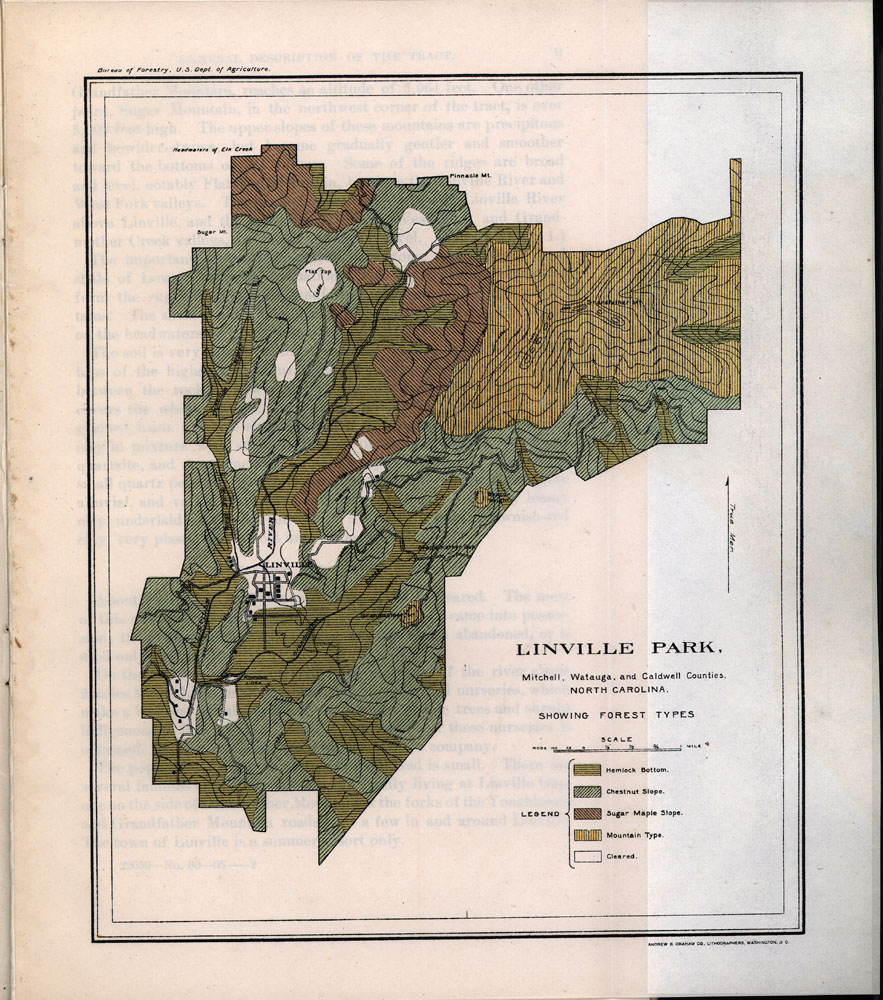
| page 7.5 | repo08a | Linville Park map. |
 |
|||||||||||||||||||||||||||||||||||||||||||||||||||||||||||||||||||||||||||||||||||||||||||||||||||||||||||||||||||||||||||||||||||||||||||||||||||||||||||||||||||||||||||||||||||||||||||||||||||||||||||||||||||||||||||||||||||||||||||||||||||||||||||||||||||||||||||||||||||||||||||||||||||||||||||||||||||||||||||||||||||||||||||||||||||||||||||||||||||||||||||||||||||||||||||||||||||||||||||||||||||||||||||
| page 8 | repo08 |
A FOREST TRACT IN WESTERN NORTH CAROLINA. An important part of the field study consisted in the running of valuation surveys, in order to collect data as a basis for the forest map, for the computation of the stand of merchantable timber, and to serve as guides in the study of the silvical conditions of the forest. Lines were run on compass courses east and west across the tract, at intervals of half a mile. As a line was chained off, all trees 5 inches in diameter and upward breast-high, within a distance of half a chain (2 rods) on each side of the line, were measured and tallied, each species being kept separate. Thus for every 10 chains in length the stand of trees on 1 acre was determined. Separate tally sheets were used for each acre. During the progress of this work the forest was divided into four types, described later, and the measurements taken on each were kept separate. A total of 604 acres, or 3.8 per cent of the whole tract, was thus surveyed. The forest map opposite is a combination of the topographical map of the United States Geological Survey and of the boundary survey map of Linville Park. The forest types were plotted from the data obtained from the valuation surveys. The area of each type was measured on the map with a planimeter. The tables to be found at the end of the description of each forest type, which give the average number of trees per acre of each species, classified according to diameter breast-high, were computed from the valuation surveys. The yield of merchantable timber (Table VI) was computed from the stand on each type and the volume tables for each species. The volume tables were obtained from the measurements of felled trees. GENERAL DESCRIPTION OF THE TRACT AREA AND LOCATION. The tract, with an area of about 16,000 acres, lies in the mountains of western North Carolina, in the counties of Mitchell, Caldwell, and Watauga, all three of which corner on the northern peak of Grandfather Mountain, near the north boundary of the tract (see map). TOPOGRAPHY, GEOLOGIC FORMATION, AND SOIL. The Elk, Watauga, and Linville rivers, and Wilson Creek, a tributary of the Johns River, rise within the boundaries of the tract, the main body of which lies on the waters of the Linville River and its two tributaries, the West Fork and Grandmother Creek. The topography is rough and the general altitude high. The lowest point on the tract, in the valley of the Linville River at Linville, is 3,800 feet above sea level; the highest point, the northern peak of |
 |
|||||||||||||||||||||||||||||||||||||||||||||||||||||||||||||||||||||||||||||||||||||||||||||||||||||||||||||||||||||||||||||||||||||||||||||||||||||||||||||||||||||||||||||||||||||||||||||||||||||||||||||||||||||||||||||||||||||||||||||||||||||||||||||||||||||||||||||||||||||||||||||||||||||||||||||||||||||||||||||||||||||||||||||||||||||||||||||||||||||||||||||||||||||||||||||||||||||||||||||||||||||||||||
| page 9 | repo09 |
GENERAL DESCRIPTION OF THE TRACT. Grandfather Mountain, reaches an altitude of 5,964 feet. One other point, Sugar Mountain, in the northwest corner of the tract, is over 5,000 feet high. The upper slopes of these mountains are precipitous and bowlder-strewn, but become gradually gentler and smoother toward the bottoms of the valleys. Some of the ridges are broad and level, notably Flat Top Mountain, between the Linville River and West Fork valleys. The whole length of the valley of Linville River, above Linville, and the lower parts of the West Fork and Grandmother Creek valleys, are broad and nearly level. (See PL II, fig. 1.) The important rocks are quartzite, sandstone, conglomerate, and shale of Lower Cambrian formation. The quartzite and sandstone form the rugged peaks of Grandfather, Pinnacle, and Sugar mountains. The shale is most in evidence in the bed of Linville River and on the headwaters of Elk Creek and Watauga River. The soil is very thin or entirely wanting on the upper slopes and tops of the higher mountains, occurring only in patches in crevices between the rocks. Lower down it gradually becomes deeper and covers the whole surface. In general it may be described as a finegrained loam. On the shale formation it contains a small amount of clay in mixture with small fragments of shale. On the sandstone, quartzite, and conglomerate the soil is apt to be sandy, mixed with small quartz pebbles. On the bottomlands of the valleys it is largely alluvial, and varies from a fine-grained clay loam to a heavy loamy clay, underlaid at a depth of 2 to 3 feet with a pure, brownish-red clay, very plastic and almost impervious to water. CLEARINGS AND SETTLEMENTS. About 1,100 acres, or 7 per cent of the tract, is cleared. The most of this area was cleared before the present owners came into possession; the greater part of the clearing has since been abandoned, or is used only for pasture. On the 120 acres of bottomland lying in a bend of the river about 2 miles below Linville are situated large commercial nurseries, which make a business of raising all the rare and valuable trees and shrubs indigenous to this region. Much of the stock for these nurseries is obtained, without payment, from the land of the company. The population living on the company's land is small. There are several families on the West Fork, one family living at Linville Gap, one on the side of Grandfather Mountain at the forks of the Yonahlossee and Grandfather Mountain roads, and a few in and around Linville. The town of Linville is a summer resort only. |
 |
|||||||||||||||||||||||||||||||||||||||||||||||||||||||||||||||||||||||||||||||||||||||||||||||||||||||||||||||||||||||||||||||||||||||||||||||||||||||||||||||||||||||||||||||||||||||||||||||||||||||||||||||||||||||||||||||||||||||||||||||||||||||||||||||||||||||||||||||||||||||||||||||||||||||||||||||||||||||||||||||||||||||||||||||||||||||||||||||||||||||||||||||||||||||||||||||||||||||||||||||||||||||||||
| page 10 | repo10 |
10 THE FOREST AREA. A total of 14,900 acres, or about 93 per cent of the tract, is still under forest, which, except for the small cuttings hereafter described, is practically virgin. Types. Four types of forest have been distinguished—hemlock bottom, chestnut slope, sugar maple slope, and mountain. HEMLOCK BOTTOM. The hemlock bottom type (PL II, fig. 2) covers the broad, nearly level bottomlands of the main valleys, on the deep, fresh loamy clay and clay-loam soils, and follows the narrow valleys of the smaller streams for some distance up the slopes of the mountains. It extends over the northwest slope of Grandmother Mountain nearly to the top. Hemlock bottom type occupies in all about 3,900 acres, or 24 per cent of the tract. The hemlock (locally known as spruce pine) is its characteristic tree. The most important trees growing in mixture with it are yellow birch, beech, red maple, and chestnut. In the Grandmother Creek Valley, especially toward the upper end, some red spruce occurs. Other species are comparatively rare, and, as a rule, grow only along the edges of the type areas. The undergrowth consists exclusively of rhododendron, which forms dense, almost impenetrable, thickets, and shades the ground so completely that nothing can grow beneath it. The ground is covered with a thick layer of half-decayed leaf litter about 6 inches deep. This and the shade of the rhododendron keep the soil moist—in places wet—throughout the year, so that fire can not run. Reproduction under the rhododendron is entirely wanting. On old logs and in occasional small openings, where some light enters, seedlings of hemlock, yellow birch, and red maple are fairly common. The hemlock is of good size, but has little clear length. Many of the largest specimens are wind-shaken and unsound in the heart. The yellow birch also is short-boled and heavy-crowned. |
 |
|||||||||||||||||||||||||||||||||||||||||||||||||||||||||||||||||||||||||||||||||||||||||||||||||||||||||||||||||||||||||||||||||||||||||||||||||||||||||||||||||||||||||||||||||||||||||||||||||||||||||||||||||||||||||||||||||||||||||||||||||||||||||||||||||||||||||||||||||||||||||||||||||||||||||||||||||||||||||||||||||||||||||||||||||||||||||||||||||||||||||||||||||||||||||||||||||||||||||||||||||||||||||||
| page 11 | repo11 | [Table] |
 |
|||||||||||||||||||||||||||||||||||||||||||||||||||||||||||||||||||||||||||||||||||||||||||||||||||||||||||||||||||||||||||||||||||||||||||||||||||||||||||||||||||||||||||||||||||||||||||||||||||||||||||||||||||||||||||||||||||||||||||||||||||||||||||||||||||||||||||||||||||||||||||||||||||||||||||||||||||||||||||||||||||||||||||||||||||||||||||||||||||||||||||||||||||||||||||||||||||||||||||||||||||||||||||
| repo12a | Plate II.
Fig.
1.—Topography and forest from Linville Valley to West Fork Valley.
|
 |
||||||||||||||||||||||||||||||||||||||||||||||||||||||||||||||||||||||||||||||||||||||||||||||||||||||||||||||||||||||||||||||||||||||||||||||||||||||||||||||||||||||||||||||||||||||||||||||||||||||||||||||||||||||||||||||||||||||||||||||||||||||||||||||||||||||||||||||||||||||||||||||||||||||||||||||||||||||||||||||||||||||||||||||||||||||||||||||||||||||||||||||||||||||||||||||||||||||||||||||||||||||||||||
| repo12b | Fig. 2.—A hemlock bottom |
 |
||||||||||||||||||||||||||||||||||||||||||||||||||||||||||||||||||||||||||||||||||||||||||||||||||||||||||||||||||||||||||||||||||||||||||||||||||||||||||||||||||||||||||||||||||||||||||||||||||||||||||||||||||||||||||||||||||||||||||||||||||||||||||||||||||||||||||||||||||||||||||||||||||||||||||||||||||||||||||||||||||||||||||||||||||||||||||||||||||||||||||||||||||||||||||||||||||||||||||||||||||||||||||||
| page 12 | repo12 |
12 CHESTNUT SLOPE. The chestnut slope type (PI. Ill, fig. 1) covers the southeast, south, southwest, and west exposures above the hemlock bottom, and the tops of the lower mountains. It also occurs on some of the high, dry ridges with a northerly exposure. It extends nearly to the top of Sugar Mountain and the Pinnacle; on the Grandfather and Grandmother it gradually gives way, at an elevation of about 4,600 feet, to the mountain type. Chestnut slope occupies about 6,600 acres, or 11 per cent of the tract. The chestnut is its characteristic tree, and comprises over 15 per cent of the stand. Other trees which occur in the type are, in the order of their numerical importance, red maple, chestnut oak, red oak, cucumber, and white oak. Locust, yellow poplar, pignut and mockernut hickories, scarlet oak, and black oak are rare. Yellow birch, beech, and hemlock also occur in considerable quantities, but usually on the edges of the type areas, where they merge into the hemlock bottoms or sugar maple slopes. In some places the undergrowth consists of thickets of mountain laurel; in others, rhododendron occupies the ground; but as a rule it is quite open and composed of a mixture of mountain laurel, huckleberry bushes, and azaleas. The ground cover is made up of a light layer of leaf litter and a scattering of goldenrod, asters, Solomon's seal, grasses, and other herbaceous plants. Reproduction in the laurel and rhododendron thickets is entirely lacking. Elsewhere it occurs more or less scatteringly. Chestnut seedlings are rare. Occasionally small, dense groups of beech seedlings and small saplings are found. Red oak seedlings are fairly common. Cucumber-tree seedlings are rare, and white oak seedlings are even scarcer than those of the chestnut. Occupying all the drier situations, this type has suffered from fire more than any of the others. The large timber is all badly fire-scarred. On the Wilson Creek side of Grandmother Ridge much of the old timber is entirely destroyed. The burned-over area is in some cases growing up to sprouts from the old stumps, and in others to huckleberry bushes only. The timber is generally poor. On the upper slopes arid the crests of the ridges it is short and stunted, and nearly all of it is defective. Even on the lower slopes, where the trees are tall and straight, sound chestnut is very rare, although there are sometimes a few good red oaks, and occasionally a yellow poplar or white oak of good quality. On the western slope of Grandmother Ridge, some distance south of Kanawa Lake, there is a fine stand of chestnut from 10 to 15 inches in diameter breast high, which in some parts of the country would bring a good price for telephone poles, but which in this region can not profitably be marketed. On the same slope, a little to the north, |
 |
|||||||||||||||||||||||||||||||||||||||||||||||||||||||||||||||||||||||||||||||||||||||||||||||||||||||||||||||||||||||||||||||||||||||||||||||||||||||||||||||||||||||||||||||||||||||||||||||||||||||||||||||||||||||||||||||||||||||||||||||||||||||||||||||||||||||||||||||||||||||||||||||||||||||||||||||||||||||||||||||||||||||||||||||||||||||||||||||||||||||||||||||||||||||||||||||||||||||||||||||||||||||||||
| page 13 | repo13 | [Chart] |
 |
|||||||||||||||||||||||||||||||||||||||||||||||||||||||||||||||||||||||||||||||||||||||||||||||||||||||||||||||||||||||||||||||||||||||||||||||||||||||||||||||||||||||||||||||||||||||||||||||||||||||||||||||||||||||||||||||||||||||||||||||||||||||||||||||||||||||||||||||||||||||||||||||||||||||||||||||||||||||||||||||||||||||||||||||||||||||||||||||||||||||||||||||||||||||||||||||||||||||||||||||||||||||||||
| page 14 | repo14 |
14 SUGAR MAPLE SLOPE. The sugar maple slope type (PL IV) extends over about 1,500 acres, or 10 per cent of the tract. It is confined chiefly to the northwestern slope of Grandfather Mountain, on the watersheds of the Linville and Watauga rivers, and to the Elk Creek watershed. Elsewhere it occurs only in occasional patches along the small water courses on the chestnut slopes. The characteristic trees are beech, sugar maple, basswood, yellow birch, hemlock, yellow buckeye, white ash, and cucumber. Numerically the beech preponderates, but the sugar maples are larger and more uniformly distributed, and in general give character to the type. The undergrowth consists mostly of witch hobble and striped maple. The ground cover is chiefly partridge berry, club moss, wood sorrel, ferns, and mosses. The soil is often very rocky, but is always moist and rich. The hemlock here, through its association with the hardwoods, is slightly taller and clearer boled than on the hemlock bottom. The white ash, basswood, and cucumber, although not plentiful, reach a large size, and commercially are the most valuable species. It is from this type that the finest black cherry was culled years ago. Reproduction of sugar maple by seed is abundant everywhere. White ash seedlings are common in small openings where sufficient light reaches the ground. Hemlock and beech seedlings are also plentiful. Basswood seedlings are extremely scarce, but reproduction by sprouts is excellent. |
 |
|||||||||||||||||||||||||||||||||||||||||||||||||||||||||||||||||||||||||||||||||||||||||||||||||||||||||||||||||||||||||||||||||||||||||||||||||||||||||||||||||||||||||||||||||||||||||||||||||||||||||||||||||||||||||||||||||||||||||||||||||||||||||||||||||||||||||||||||||||||||||||||||||||||||||||||||||||||||||||||||||||||||||||||||||||||||||||||||||||||||||||||||||||||||||||||||||||||||||||||||||||||||||||
| page 15 | repo15 | [Table] |
 |
|||||||||||||||||||||||||||||||||||||||||||||||||||||||||||||||||||||||||||||||||||||||||||||||||||||||||||||||||||||||||||||||||||||||||||||||||||||||||||||||||||||||||||||||||||||||||||||||||||||||||||||||||||||||||||||||||||||||||||||||||||||||||||||||||||||||||||||||||||||||||||||||||||||||||||||||||||||||||||||||||||||||||||||||||||||||||||||||||||||||||||||||||||||||||||||||||||||||||||||||||||||||||||
| page 16 | repo16 | [Table] |
 |
|||||||||||||||||||||||||||||||||||||||||||||||||||||||||||||||||||||||||||||||||||||||||||||||||||||||||||||||||||||||||||||||||||||||||||||||||||||||||||||||||||||||||||||||||||||||||||||||||||||||||||||||||||||||||||||||||||||||||||||||||||||||||||||||||||||||||||||||||||||||||||||||||||||||||||||||||||||||||||||||||||||||||||||||||||||||||||||||||||||||||||||||||||||||||||||||||||||||||||||||||||||||||||
| page 17 | repo17 |
17 Table V, the figures for hemlock representing the averages of the trees on the three types according to the number in each. table V.—Average height, clear length, and volume (Doyle) of the four principal species.
The total yield of merchantable timber in the present stand (Table VI) was computed by combining the stand tables giving the average number of trees of each species and diameter class per acre with the volume tables for each species, calculated for cutting limits of 16 inches, 18 inches, and 20 inches, with allowances for cull varying from 15 to 55 per cent. These three sets of figures are given to show distinctly the amounts of timber that would be left by adopting an 18-inch or 20-inch limit rather than a 16-inch. As a rule a high limit is advisable in a mixed forest, but in this case specific recommendations are made for each "type. |
 |
|||||||||||||||||||||||||||||||||||||||||||||||||||||||||||||||||||||||||||||||||||||||||||||||||||||||||||||||||||||||||||||||||||||||||||||||||||||||||||||||||||||||||||||||||||||||||||||||||||||||||||||||||||||||||||||||||||||||||||||||||||||||||||||||||||||||||||||||||||||||||||||||||||||||||||||||||||||||||||||||||||||||||||||||||||||||||||||||||||||||||||||||||||||||||||||||||||||||||||||||||||||||||||
| page 18 | repo18 |
18 A FOREST TRACT IN WESTERN NORTH CAROLINA. Table V, the figures for hemlock representing the averages of the trees on the three types according to the number in each. table V.—Average height, clear length, and volume (Doyle) of the four principal species.
The total yield of merchantable timber in the present stand (Table VI) was computed by combining the stand tables giving the average number of trees of each species and diameter class per acre with the volume tables for each species, calculated for cutting limits of 16 inches, 18 inches, and 20 inches, with allowances for cull varying from 15 to 55 per cent. These three sets of figures are given to show distinctly the amounts of timber that would be left by adopting an 18-inch or 20-inch limit rather than a 16-inch. As a rule a high limit is advisable in a mixed forest, but in this case specific recommendations are made for each "type. |
 |
|||||||||||||||||||||||||||||||||||||||||||||||||||||||||||||||||||||||||||||||||||||||||||||||||||||||||||||||||||||||||||||||||||||||||||||||||||||||||||||||||||||||||||||||||||||||||||||||||||||||||||||||||||||||||||||||||||||||||||||||||||||||||||||||||||||||||||||||||||||||||||||||||||||||||||||||||||||||||||||||||||||||||||||||||||||||||||||||||||||||||||||||||||||||||||||||||||||||||||||||||||||||||||
| page 19 | repo19 |
table VI.— Yield of merchantable timber on exploitable area. CHESTNUT SLOPE—6,600 ACRES.
SUGAR MAPLE SLOPE—1,500 ACRES.
HEMLOCK BOTTOM—3,900 ACRES.
THE THREE TYPES COMBINED—12,000 ACRES.
No attempt was made to estimate the yield of white oak, red oak, or yellow poplar. The total stand of these species will not exceed 600,000 board feet. Yellow poplar is extremely scarce; hardly a dozen sound trees of merchantable size were found in the field study. White oak is somewhat more plentiful, but trees of good quality are to be found only in a few small, isolated groups. Red oak is fairly well distributed throughout the whole of the chestnut slope type, but the trees as a rule are very short-boled, with large, heavy crowns, and are unfit for lumber. The number of red oaks with sufficient clear length to have a market value under present conditions is small. |
 |
|||||||||||||||||||||||||||||||||||||||||||||||||||||||||||||||||||||||||||||||||||||||||||||||||||||||||||||||||||||||||||||||||||||||||||||||||||||||||||||||||||||||||||||||||||||||||||||||||||||||||||||||||||||||||||||||||||||||||||||||||||||||||||||||||||||||||||||||||||||||||||||||||||||||||||||||||||||||||||||||||||||||||||||||||||||||||||||||||||||||||||||||||||||||||||||||||||||||||||||||||||||||||||
| page 20 | repo20 |
20 The chestnut which forms such an important part of the stand on the chestnut slope type has but little value to the lumberman. Many of the larger trees are wind-shaken and unsound at the butt, and all the timber is so infested with borers as to be unfit for any but the very lowest grades of lumber, which it does not pay at present to handle. Chestnut wood, however, is rapidly assuming importance throughout the Southern Appalachians on account of the tannin which it contains. Many tannin-extract plants have been built within the past few years which use a large amount of chestnut wood annually. The low quality of the chestnut upon the Linville tract as lumber does not impair its value for the production of tannin. The chances are good that it will not be long before the supply on the tract will be in demand for that purpose. No calculation was made of the available quantity of chestnut wood, but as the cutting of the hemlock trees will produce a large quantity of bark, Table VII is given to show the possible returns from that source. The yield is estimated to be 1 cord of bark to 1,500 board feet of timber. table VII.—Yield of hemlock bark.
The value of the sugar maple, beech, and other woods, not specially considered here lies altogether in the future. None of them are now salable, yet there is little doubt that before many years they will add considerably to the income to be derived from the property. LUMBERING. v About fifteen years ago some fine black cherry was lumbered on the northwest slope of Grandfather Mountain and on the Elk Creek watershed. Since the present owners, came into possession a few curly birch trees have been sold from the Elk Creek watershed, a little white oak, chestnut, and hemlock has been cut in the neighborhood of Linville for lumber to be used in building the town, and a French pipe manufacturing company has bought and cleaned out the largest mountain laurel. With these exceptions the natural forest has not been disturbed. |
 |
|||||||||||||||||||||||||||||||||||||||||||||||||||||||||||||||||||||||||||||||||||||||||||||||||||||||||||||||||||||||||||||||||||||||||||||||||||||||||||||||||||||||||||||||||||||||||||||||||||||||||||||||||||||||||||||||||||||||||||||||||||||||||||||||||||||||||||||||||||||||||||||||||||||||||||||||||||||||||||||||||||||||||||||||||||||||||||||||||||||||||||||||||||||||||||||||||||||||||||||||||||||||||||
| page 20 | repo21 |
21. MARKET AND TRANSPORTATION FACILITIES. FIRES. Fires used to be frequent, and are the cause of much of the unsound-ness in the large hardwood timber. In the sections which the people have abandoned, however, the fires have become much less common. On the Wilson Creek side of Grandmother Ridge, where the bulk of the population now is, fires still do considerable damage. Throughout all this region the greater part of the forest fires are directly traceable to the careless practices of the inhabitants, for there are no outside exposures. Climatically, the region is unfavorable to forest fires, since as a rule the vegetation is too wet or too succulent to burn readily. During a few weeks in the spring and in the fall the forest may become dry enough to be easily kindled. MARKET AND TRANSPORTATION FACILITIES. Pineola or Saginaw, where a lumber company is operating a sawmill, with a capacity of 50,000 board feet a day, is about 3 miles down the Linville River from Linville. It is connected with the Norfolk and Western Railway at Johnson City, Tenn., by a narrow-gauge railroad. The 12 or 13 miles of this road between Pineola and Cranberry is controlled by this company; the rest of the line from Cranberry to Johnson City is owned by an iron company. The wagon road from Linville to Cranberry is about 13 miles long, and is rough and in poor condition. None of the county roads on the Linville tract are fit to haul heavy loads over. Some are hardly good enough for bridle paths. The only good wagon road is the Yonahlossee, which runs from Linville along the south side of Grandfather Mountain to Blowing Rock, a distance of 18 or 20 miles. It was built and is kept in repair by the Linville Company, but is so situated that it would be of little use in getting out logs or lumber. The Carolina and Northwestern Railroad, connecting with the Southern Railway at Hickory, is being pushed westward from Lenoir across the mountains. If everything goes well it will in a short time have reached the valley of Wilson Creek, on the east side of Grandmother Ridge, only 5 miles from the town of Linville. The lumber company is extending its narrow-gauge logging road from the lower valley of Linville River to meet the extension of the Carolina and Northwestern Railroad, and it is considering the projection of another line from its plant at Pineola, up the Linville River and over the divide into the Watauga Valley. It has applied to the Linville Company for a right of way through its property, and has made an offer for all or part of the timber upon the tract. Upon the completion of these roads the Linville Company will have an outlet for its lumber to the south, to the west, and to the north. |
 |
|||||||||||||||||||||||||||||||||||||||||||||||||||||||||||||||||||||||||||||||||||||||||||||||||||||||||||||||||||||||||||||||||||||||||||||||||||||||||||||||||||||||||||||||||||||||||||||||||||||||||||||||||||||||||||||||||||||||||||||||||||||||||||||||||||||||||||||||||||||||||||||||||||||||||||||||||||||||||||||||||||||||||||||||||||||||||||||||||||||||||||||||||||||||||||||||||||||||||||||||||||||||||||
| page 22 | repo22 |
22 A small waterpower mill of about 5,000 feet daily capacity, at Banners Elk, Watauga County, would buy the ash, cucumber, basswood, and hemlock on the Elk Creek watershed. RECOMMENDATIONS. GENERAL. Lumbering on a large scale would be inadvisable because it would defeat the prime object of the owners by impairing the attractiveness of Linville as a summer resort. Cutting on the hemlock bottom, whether with the object of reproducing the forest or of ultimately clearing the land, would for the time being considerably mar the appearance of the locality, since that is largely due to the great thickets of rhododendron, which would necessarily be destroyed. As the town is situated in the midst of the hemlock bottom this disfiguration could not be concealed. Although a local lumber company wants the timber, it would be difficult to induce it to pay its full value and at the same time agree to lumber conservatively, and it is not in a position to handle hemlock bark. On the other hand, by logging on a small scale with portable mills, the effect upon the forest will be more easily concealed, the work can be much more easily controlled, and it will be possible to pay more attention to silvicultural requirements. Further, the completion of the projected railroads will notably improve the market conditions. Lumbering will then be more profitable, as it will be possible to ship material direct to outside consumers, or to sell the timber on the stump to competing operators, as may be most desirable. The stumpage value of the ash, cucumber, basswood, oak, and hemlock will rise, hemlock bark and chestnut extract-wood will become salable, and in consequence the margin of profit in lumbering will be considerably increased. In the same degree the opportunities for cutting along silvicultural lines will be improved. It is therefore advised: (1) To grant a right of way for a railroad up the Linville Valley, under restrictions that shall protect the forest from fire and shall control the cutting of timber for construction purposes. (2) To sell the hemlock on the level hemlock bottomland which is valuable for agriculture, under restrictions that shall afford protection from fire and provide for the cutting of the timber under the direction of a forester. (3) To sell the merchantable hardwoods whenever it can be done to advantage, but in every case to require the purchaser to log in such a way that the renewal of the forest will be assured. (4) To develop a road s}7stem on the property that shall make all parts of it accessible, and serve both the loggers and the tourists. |
 |
|||||||||||||||||||||||||||||||||||||||||||||||||||||||||||||||||||||||||||||||||||||||||||||||||||||||||||||||||||||||||||||||||||||||||||||||||||||||||||||||||||||||||||||||||||||||||||||||||||||||||||||||||||||||||||||||||||||||||||||||||||||||||||||||||||||||||||||||||||||||||||||||||||||||||||||||||||||||||||||||||||||||||||||||||||||||||||||||||||||||||||||||||||||||||||||||||||||||||||||||||||||||||||
| page 23 | repo23 |
RECOMMENDATIONS. 23 The means by which these ends may be accomplished and the revenue that may be expected are considered in some detail in the succeeding pages. ROADS. The establishment of railroad communication with Linville will settle the question of transportation from the tract to outside markets. The problem of how to get forest products from the woods to the railroad, however, is still unsolved, since the few good, well-graded wagon roads are so located as to be of little use in logging. If logging railroads are constructed, whether operated by horse or steam power, they can be used for nothing else. On the other hand, good, well-graded wagon roads, leading from the town to all parts of the tract, would not only be useful in lumbering operations, but would also lead to the development of portions of the tract now inaccessible. The attractiveness of the place would thus be enhanced and its protection from trespass and fire would be more easily effected. The main arteries of the road system would necessarily run up the main valleys—those of Linville River, West Fork, and Grandmother Creek. As the traffic upon them, especially during the time when the summer visitors were about, would be considerable, they should be of good width and of comparatively easy gradient. It would be advisable to construct them at least 16 feet wide and with a maximum grade of 6 per cent. A 16-foot dirt road can be built in this region at a cost of from $250 to $500 per mile, according to the nature of the ground. The secondary roads, branching off from these main arteries, would be used chiefly in hauling out the forest products, and consequently need not be so well built. An average width of 10 feet and a maximum grade of 10 per cent would answer, and the cost of construction would be correspondingly less. These roads should not be built all at once, but should be extended gradually, or only as fast as they are needed in the logging. In this way their cost would be but little felt, CUTTING. In discussing the cutting to be done, the mountain type, which is so inaccessible as to be of no present commercial value, will not be considered. The other three types differ so decidedly that the distinct silvicultural problem which each presents will be discussed separately. HEMLOCK BOTTOM. Of the 3,900 acres included within the hemlock bottom type, about 1,500 acres in the valleys of Linville River, West Fork, and Grandmother Creek are capable of yielding better returns under agriculture than under forest. Of these, 600 acres occupy the valley of Grand-[mother Creek] |
 |
|||||||||||||||||||||||||||||||||||||||||||||||||||||||||||||||||||||||||||||||||||||||||||||||||||||||||||||||||||||||||||||||||||||||||||||||||||||||||||||||||||||||||||||||||||||||||||||||||||||||||||||||||||||||||||||||||||||||||||||||||||||||||||||||||||||||||||||||||||||||||||||||||||||||||||||||||||||||||||||||||||||||||||||||||||||||||||||||||||||||||||||||||||||||||||||||||||||||||||||||||||||||||||
| repo24a |
SUGAR-MAPLE TYPE ON ELK CREEK.
fig. 1.—large cucumber tree (in the center) and hemlock (on the right). fig. 2.—group of white ash and basswood poles |
 |
||||||||||||||||||||||||||||||||||||||||||||||||||||||||||||||||||||||||||||||||||||||||||||||||||||||||||||||||||||||||||||||||||||||||||||||||||||||||||||||||||||||||||||||||||||||||||||||||||||||||||||||||||||||||||||||||||||||||||||||||||||||||||||||||||||||||||||||||||||||||||||||||||||||||||||||||||||||||||||||||||||||||||||||||||||||||||||||||||||||||||||||||||||||||||||||||||||||||||||||||||||||||||||
| repo24b | Bul. 60,
Bureau of Forestry, U. S. Dept of Agriculture, Plate V fig. 1.hemlock bottom converted to meadow, cranberry, N. C. fig. 2—hemlock bottom Two YEARS AFTER LOGGING [Ground covered with slash, which becomes inflammable in dry seasons.] |
 |
||||||||||||||||||||||||||||||||||||||||||||||||||||||||||||||||||||||||||||||||||||||||||||||||||||||||||||||||||||||||||||||||||||||||||||||||||||||||||||||||||||||||||||||||||||||||||||||||||||||||||||||||||||||||||||||||||||||||||||||||||||||||||||||||||||||||||||||||||||||||||||||||||||||||||||||||||||||||||||||||||||||||||||||||||||||||||||||||||||||||||||||||||||||||||||||||||||||||||||||||||||||||||||
| repo24c |
Bul. 60, Bureau of Forestry, U. S. Dept. of Agriculture Plates VL
fig. 1.—chestnut logs at the mill. fig. 2.—chestnut slope type after careless logging. [Sprout reproduction from high, ragged stumps not good.] |
 |
||||||||||||||||||||||||||||||||||||||||||||||||||||||||||||||||||||||||||||||||||||||||||||||||||||||||||||||||||||||||||||||||||||||||||||||||||||||||||||||||||||||||||||||||||||||||||||||||||||||||||||||||||||||||||||||||||||||||||||||||||||||||||||||||||||||||||||||||||||||||||||||||||||||||||||||||||||||||||||||||||||||||||||||||||||||||||||||||||||||||||||||||||||||||||||||||||||||||||||||||||||||||||||
| page 24 | repo24 |
24 [Grand] mother Creek, 100 acres lie in the Linville River Valley just south of the Linville-Cranberry road, and the balance is in West Fork and Upper Linville Valleys. Plate V, figure 1, shows the adaptability of the hemlock bottomland for agriculture. The yield from the 700 acres, which may be cut first, of hemlock timber and bark, cutting to 12 inches in diameter breasthigh, and of yellow birch in trees 20 inches and over in diameter breasthigh, among which there is a possibility of finding some curly birch, is as follows: Hemlock lumber .................................. 9,303,000 bd. ft. Hemlock bark..................................... 6, 200 cords. Yellow birch....................................... 3,850trees. The stumpage value of hemlock is at present very low, barely $1 per thousand, and that of bark, $2 per cord. It is expected that within a few years these prices will be considerably advanced. After the completion of the railroad across the Linville tract it will not be wise to dispose of the hemlock until it will bring the following prices: Hemlock timber, $4.50 per thousand board feet; hemlock bark, $2.50 per cord. The total value, then, of the hemlock timber and bark on the 700 acres is as follows: Timber, 9,303,000 board feet, at $4.50 per M .............. $ 41,863. 50 Bark, 6,200 cords, at $2.50 per cord..................... 15,500.00 Total..................................................... 57,363.50 The quantity and total value of the curly birch can be determined only by a careful tree-to-tree estimate. The best is worth on the stump at least $30 per thousand board feet. In logging this area it is not necessary to require the purchasers of the timber to modify their methods to suit the silvicultural requirements of the forest, since the lumbering of all land of this character should be followed by total clearing. The Linville Company should, however, before going any farther, plainly mark the boundary of the area from which it wishes to have the timber removed. In purchasing the timber, the contractor should be required to agree: (1) To cut no timber outside the blazed line marking the boundary of the area to be cleared. (2) To prevent any fire from escaping from the lumbered area into the adjacent forest. ^ (3) To finish lumbering within two years from the date of the signing of the contract, or, if it is not completed, to forfeit all right to such timber as has not been removed. The remaining 2,400 acres on which the type occurs are too rough and rocky for agriculture; the}7 are better suited for forestry. (See PI. V, fig. 2.) The hemlock is practically the only commercial tree on |
 |
|||||||||||||||||||||||||||||||||||||||||||||||||||||||||||||||||||||||||||||||||||||||||||||||||||||||||||||||||||||||||||||||||||||||||||||||||||||||||||||||||||||||||||||||||||||||||||||||||||||||||||||||||||||||||||||||||||||||||||||||||||||||||||||||||||||||||||||||||||||||||||||||||||||||||||||||||||||||||||||||||||||||||||||||||||||||||||||||||||||||||||||||||||||||||||||||||||||||||||||||||||||||||||
| page 25 | repo25 |
RECOMMENDATIONS. 25 the type. Other valuable species, such as white ash, yellow poplar, white oak, red spruce, etc., do not occur in commercial quantities. All cuttings on these areas should be made for the purpose of removing mature and overmature hemlock, while leaving thrifty young hemlock standing unharmed as far as possible. The operations should be conducted with a view to destroying the rhododendron, thereby creating conditions favorable to the reproduction of the hemlock. To do this without interfering with the attractiveness of these areas is impossible. Esthetically, the rhododendron is greatly to be desired; commercially and silviculturally, it cumbers the ground. It is, therefore, recommended that in logging on the hemlock bottom, strips along much-frequented trails and roads be left untouched; a width of 100 feet for such strips will in most cases completely conceal the logged area. In the case of trees which show signs of unsoundness, all should be cut which will yield at least one saw-log. Every sound tree which is under 18 inches in diameter breast high should be considered immature and should be left standing. Trees 18 inches and over should be considered mature and should all be cut, except in those few cases where the stand is very open or where it is necessary to leave a tree for seeding purposes.
If the young trees thus left appear unable
to withstand the sudden exposure to new conditions it will be necessary to
modify these directions. The decision must be left, however, to the
forester on the ground. CHESTNUT SLOPE. Relatively to its area, the amount of saw-timber obtainable from this type is insignificant. The removal of the few scattered red and white oaks and yellow poplars of merchantable size would have but little effect on the general character of the forest. The main opportunity for profit and for the silvicultural improvement of the forest lies in the disposal of the chestnut as extract-wood for the tanneries. (See PL VI, fig. 1.) The cutting of this tree, which forms over 45 per cent of the stand, will greatly influence the character of the forest, yet it is desirable to replace the defective trees by others of greater value as soon as possible. For the reproduction of the chestnut, dependence may be placed on sprouts from the stumps, so that the leaving of seed trees of this species need not be considered. In many places there is already on the ground a scattering of red oak and other seedlings. The opening up of the forest by the removal of the large, over-mature chestnuts will greatly stimulate the growth of these seedlings, and also of the sapling and pole trees of cucumber and other valuable species which occur in certain parts of the type. The best chestnut has a value on the stump of $1.50 per 1,000 feet board measure, and such of it as is not fit for saw-logs is worth 50 |
 |
|||||||||||||||||||||||||||||||||||||||||||||||||||||||||||||||||||||||||||||||||||||||||||||||||||||||||||||||||||||||||||||||||||||||||||||||||||||||||||||||||||||||||||||||||||||||||||||||||||||||||||||||||||||||||||||||||||||||||||||||||||||||||||||||||||||||||||||||||||||||||||||||||||||||||||||||||||||||||||||||||||||||||||||||||||||||||||||||||||||||||||||||||||||||||||||||||||||||||||||||||||||||||||
| page 26 | repo26 |
26 cents per cord as tannin-extract wood. Before the chestnut is sold the ground should be gone over and the trees to be cut should be marked and carefully estimated, in order to obtain the yield on the area, both of the saw-timber and the extract-wood. For cutting on the chestnut slopes the following recommendations are made: In logging red oak, white oak, or yellow poplar on the lower slopes all trees over 20 inches in diameter breast high (provided they are of sufficient clear length and are sound) should be considered as merchantable and should be cut. All straight, tall, and thrifty trees of these species under 20 inches diameter breast high should be considered immature and be left standing. Large trees unavailable for lumber may be left standing to shade the soil and furnish seed. Merchantable trees are so scarce and occur so scatteringly that it will not pay to leave any for seeding purposes. All chestnut that shows the least sign of decay or of wormholes should be cut. No chestnuts should be left standing unless they are straight, sound, and healthy, and are under 16 inches in diameter breast high. In cutting chestnut," sprouts may be counted on for the reproduction of the species, and in order that they may come up strong and vigorous care should be taken to cut the stumps as low and as smooth as possible. At the most, they should never be higher than their diameter across the top. (See PI. VI, fig. 2.) The winter months are the best time for cutting. Cutting according to these recommendations will be heavy, and may in some cases amount almost to clear cutting. At first thought this may seem to be going too far, but when it is remembered that sprouts from the stumps will develop so rapidly that forest conditions will soon be reestablished and the ground be sufficiently protected, no fear need be felt that the productive capacity of the forest will be damaged. SUGAR MAPLE SLOPE. The two predominating species on the sugar maple slope type are the beech and the sugar maple, which combined compose over 40 per cent of the forest. They are both very tolerant of shade, and produce seed in abundance. Throughout the type the ground is covered with their seedlings, those of the sugar maple predominating. Cutting of any sort, however carefully done, can not fail to favor the development of these two species, which, so far as their lumber is concerned, are the least valuable of any growing on the type. On the other hand, the two most valuable timber trees of the type, the white ash and cucumber, are among the rarest. They form, respectively, but 4 and 2 per cent of the total stand. They are both intolerant of shade, and their seedlings will thrive only when |
 |
|||||||||||||||||||||||||||||||||||||||||||||||||||||||||||||||||||||||||||||||||||||||||||||||||||||||||||||||||||||||||||||||||||||||||||||||||||||||||||||||||||||||||||||||||||||||||||||||||||||||||||||||||||||||||||||||||||||||||||||||||||||||||||||||||||||||||||||||||||||||||||||||||||||||||||||||||||||||||||||||||||||||||||||||||||||||||||||||||||||||||||||||||||||||||||||||||||||||||||||||||||||||||||
| page 27 | repo27 |
RECOMMENDATIONS. 27 enjoying full sunlight. Both species bear a fair amount of seed. In certain favored spots seedlings of the ash are fairly common; those of the cucumber are extremely scarce. Under the conditions here offered there is some small chance of reproducing the former, but for the latter there is little hope. Of the other merchantable species the hemlock, being very tolerant and a fair producer of seed, is perfectly well able to reproduce itself in the mixture. The basswood also can be counted on to hold its own in the forest; reproduction from seed is poor, but the stumps sprout readily and sapling growth is vigorous. It is recommended that cutting on the sugar rnaple slopes be conducted along the following lines: The diameter limit for the hardwoods should be 20 inches. All sound and healthy trees of white ash, cucumber, and basswood under this diameter should be left standing. Wherever conditions are favorable to the reproduction of the ash, large seed trees over 20 inches in diameter breasthigh should be left standing in order to increase the production of seedlings. The leaving of seed trees of either cucumber or basswood is not recommended, but care should be taken to cut the stumps of the latter as low as possible, as was suggested for the chestnut, so that regeneration by sprouts may be fostered. The diameter limit for the hemlock should be 18 inches. This will insure leaving enough trees to furnish seed, and will guard against too great exposure of the soil. RULES APPLICABLE TO ALL TYPES. Logging operations on all three of the types should be governed by the following rules: (1) In the felling of timber great care must be exercised to avoid breaking down or in any way injuring young trees of the commerciall}' important species, viz, white ash, cucumber, basswood, white oak, 37ellow poplar, red oak, chestnut, hemlock, red spruce, black cherry, and sweet birch. (2) In cutting small stuff for corduroy, for making trails, skidways. etc., trees of the above species must not be taken. Instead, the less valuable species, such as beech, sugar maple, red maple, black gum, sourwood, etc., should be used. (3) Before beginning operations in a given locality, all trees which are to be cut should be marked, and care should be taken that all marked trees be taken out and that no unmarked trees of the above-mentioned merchantable species be cut. |
 |
|||||||||||||||||||||||||||||||||||||||||||||||||||||||||||||||||||||||||||||||||||||||||||||||||||||||||||||||||||||||||||||||||||||||||||||||||||||||||||||||||||||||||||||||||||||||||||||||||||||||||||||||||||||||||||||||||||||||||||||||||||||||||||||||||||||||||||||||||||||||||||||||||||||||||||||||||||||||||||||||||||||||||||||||||||||||||||||||||||||||||||||||||||||||||||||||||||||||||||||||||||||||||||
| page 28 | repo28 |
28 A FOREST TRACT IN
WESTERN NORTH CAROLINA. The custom of permitting the nurseries to obtain nursery stock from the Linville tract should be stopped as regards the commercial species, ^but the practice of digging up rhododendron and mountain laurel is beneficial to the forest and should be encouraged. The removal of the rare shrubs and herbs does no particular damage, but if the plants have a market value the people who pay the taxes on the land should profit from the sale of them. Of galax picking the same may be said. If the right to pick the galax were let to but one man, it would be to his interest to see that all irresponsible persons who were not gathering the leaves for him were kept off the tract. In this way something might be accomplished also toward protecting the game and keeping out fires. FIRE AND GAME PROTECTION. As stated on page 21, forest fires on the Linville tract are confined chiefly to the Wilson Creek drainage area. With the construction of a railroad through the middle of the tract and the commencement of logging operations, the danger to the forest from fire will be greatly increased, and the cost of protection will be correspondingly higher. At present anyone who desires may shoot upon the property. The result is that there is very little game, but if poaching were stopped the tract might soon be made an excellent game preserve. • Fire protection and game protection should go hand in hand. The first essential is that the boundaries of the tract be plainly marked. As they are blazed at present, it takes a good surveyor and-woodsman to locate them. Every line and corner should be distinctly and plainly designated and warning notices posted at frequent intervals, so that a trespasser, when caught, could not make the excuse that he did not know he had crossed the company's line. The second essential is that the tract be constantly and thoroughly patrolled. One man should be employed on this work the year round at a salary of from $30 to $40 per month. In seasons when danger from fire is greatest two men should be so employed. They should have power to arrest trespassers, and to employ help when needed to extinguish fires. The construction of the wagon roads already recommended, of secondary roads feeding into them, and of bridle trails, will greatly simplify the task of guarding-the property by making all parts of the tract easily accessible and by providing points of vantage from which to fight fire. The ranger or warden could do much work on the trails when there was no danger from fire. Any right of way or privilege granted on the tract should carry the condition that every reasonable precaution be taken to guard against |
 |
|||||||||||||||||||||||||||||||||||||||||||||||||||||||||||||||||||||||||||||||||||||||||||||||||||||||||||||||||||||||||||||||||||||||||||||||||||||||||||||||||||||||||||||||||||||||||||||||||||||||||||||||||||||||||||||||||||||||||||||||||||||||||||||||||||||||||||||||||||||||||||||||||||||||||||||||||||||||||||||||||||||||||||||||||||||||||||||||||||||||||||||||||||||||||||||||||||||||||||||||||||||||||||
| page 31 | repo29 |
29 the escape of fire, and that the grantee shall furnish the forest ranger, free of charge, such help as may be necessary to extinguish any forest fire that may arise from or near its operations. It should also require the use of efficient spark arresters on all locomotives traversing the tract. As a further safeguard against the setting of fire by the railroad, it is advised that in any cutting which may be done along the railroad a belt of rhododendron 50 feet wide be left whenever possible along the edge of the right of way. CONCLUSION. The above recommendations for the management of the forest on the Linville tract have necessarily been confined to a general outline only. The tract offers, however, many opportunities for effective work in forestry. Properly managed, the property may be made to yield a very considerable income at once, and at the same time be put in better shape than it now is to produce lumber and to serve as an attraction. It is therefore earnestly advised that a competent forester be employed to take complete charge of all the forest work upon the property, viz, the laying out and building of roads and trails, the planning and supervising of lumbering operations, the development of an effective system of fire and game protection, and the general development and improvement of the stand. |
 |
|||||||||||||||||||||||||||||||||||||||||||||||||||||||||||||||||||||||||||||||||||||||||||||||||||||||||||||||||||||||||||||||||||||||||||||||||||||||||||||||||||||||||||||||||||||||||||||||||||||||||||||||||||||||||||||||||||||||||||||||||||||||||||||||||||||||||||||||||||||||||||||||||||||||||||||||||||||||||||||||||||||||||||||||||||||||||||||||||||||||||||||||||||||||||||||||||||||||||||||||||||||||||||
| index page32 | repo32 |
32
INDEX.
Page
Railroads, facilities; recommendation for
right of way............. 21, 22
Rivers, Linville tract,
notes............................................... 8,9
Seedlings. See Reproduction.
White ash. See Ash. |
 |
|||||||||||||||||||||||||||||||||||||||||||||||||||||||||||||||||||||||||||||||||||||||||||||||||||||||||||||||||||||||||||||||||||||||||||||||||||||||||||||||||||||||||||||||||||||||||||||||||||||||||||||||||||||||||||||||||||||||||||||||||||||||||||||||||||||||||||||||||||||||||||||||||||||||||||||||||||||||||||||||||||||||||||||||||||||||||||||||||||||||||||||||||||||||||||||||||||||||||||||||||||||||||||